The honest comparison
Plate reverb vs plugins
The honest comparison isn't hardware reverb vs software reverb - it's a pair of room microphones vs a room-modelling plugin. The Reverbophone happens to be built as two mics on a steel plate. Here is the structural difference, and where a plugin still wins.
Updated September 2026
What is actually different between the Reverbophone and a plugin?
A plugin applies a fixed impulse response or algorithm to whatever signal you feed it, the same way every time. The Reverbophone is not a model, it is two microphones on a real plate: the room’s sound moves the steel, and the mics capture that movement live, phase-coherent with the source. The fair comparison is a pair of room mics against a room-modelling plugin, not hardware reverb against software reverb.
| Criteria | Reverbophone | Plugin |
|---|---|---|
| What it captures | New acoustic information: real air moving a real steel plate. | A model of a plate's behaviour, built from a fixed impulse response or algorithm. |
| Response to performance | Live. Every take, every mic placement, every room changes what comes back. | The same modelled decay, applied to whatever you feed it. |
| Workflow | Printed live at tracking, phase-coherent with the source, baked into the take. | Applied at mix time, fully recallable, fully undoable. |
| Cost | $8,995 inc. GST, one instrument, shared across every session. | Typically $30 to $249. Most engineers already own several. |
| Where it is honestly the right call | A distinctive, physical signature sound, captured at the source, that a static model cannot reproduce. | Full recall, surgical control after the fact, and real budget headroom. |
The Reverbophone is pure magic. It's a way of extending the size & depth of your room. It brings more length & more life to it in a way that does NOT feel like hardware or software. It's incredible!
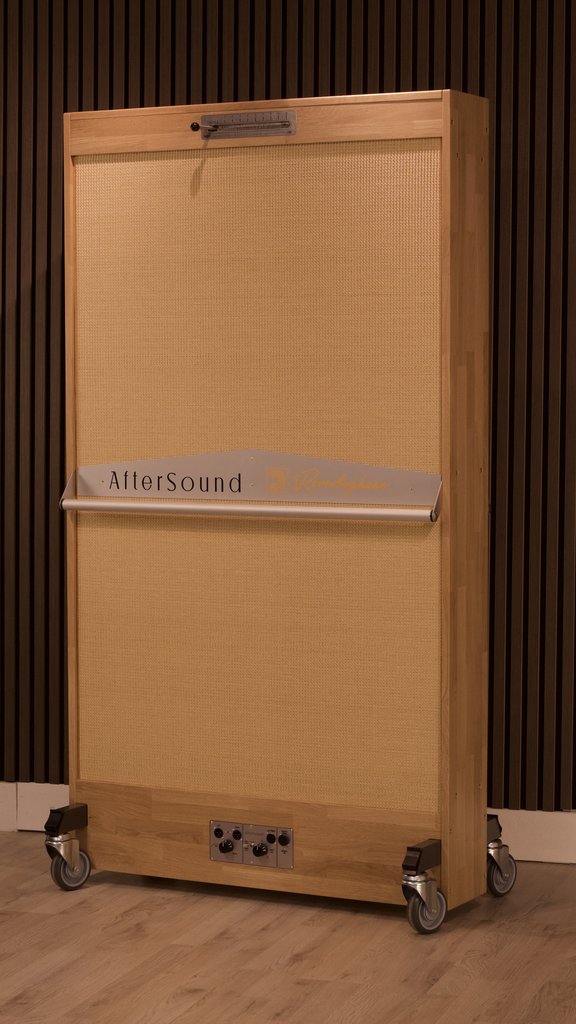
Is a plate reverb worth it over a plugin?
Depends on the session. A plugin is fully recallable, endlessly adjustable after the fact, and it is already sitting in your DAW. The Reverbophone earns its place when you want a real, physical reverb baked into the take: a distinctive sound reacting to the actual performance and the actual room, not a static model of one.
At $30 to $249 a plugin, most engineers already own several, and $8,995 inc. GST is a real gap to close. The honest case is not that hardware sounds better in the abstract, it is that this hardware captures something a static model cannot: new information, every time you use it. Move air, not algorithms.
Can I hear the difference?
Listen to wet-only recordings on Listen, or arrange an audition and hear it in a room. AKA Acoustics does not run a standing demo showroom yet, so audition availability depends on the schedule, ask when you enquire.
FAQ
Common questions
Do I still need plugins if I have a Reverbophone?
Yes. They do different jobs. A plugin is fully recallable and adjustable after the fact; the Reverbophone is printed live at tracking, phase-coherent with the source, and baked into the take. Most engineers use both.
Is hardware reverb better than plugins?
Not in the abstract, it is structurally different. A plugin applies a fixed impulse response or algorithm to whatever you feed it, the same way every time. The Reverbophone captures new acoustic information: real air moving a real steel plate, live, every time you use it.
Can I print the Reverbophone at tracking?
Yes, that is the workflow. Feed the room's sound to the plate during tracking and the two microphones capture the decay live, phase-coherent with the source and baked into the take, rather than added afterwards in the mix.
What does a plate reverb plugin cost vs the Reverbophone?
A plate reverb plugin typically runs US$30 to US$249, and most engineers already own several. The Reverbophone is $8,995 inc. GST, one instrument shared across every session it is used on.
Order enquiry
Own both, use the right one
Enquire to order a Reverbophone, or arrange an audition before you decide.
$8,995 inc. GST · Built to order in 8 to 12 weeks
