How it works
How the Reverbophone works
It looks like a plate reverb. It is a microphone: a real steel plate excited by the room's own sound, captured by two mics, and shaped by one mechanical lever.
Updated September 2026
What is plate reverb?
A plate reverb is a mechanical reverberation device: a large, tensioned steel plate that vibrates when it is excited by sound, producing a dense, natural-sounding decay. It has been a studio reference sound for decades.
The Reverbophone excites that plate differently. Instead of driving it electrically from a line signal, it lets the plate vibrate with the acoustic sound already happening in the room, then captures that vibration with two microphones mounted directly on the plate. Zero DSP. 1 mic. 1000 sounds.
The mechanism
How the Reverbophone creates reverb
Sound in the room reaches the steel plate and sets it vibrating, the same way a cymbal or a drum head responds to the air around it. Two microphones, mounted on the plate itself, pick up that vibration and return it as reverb.
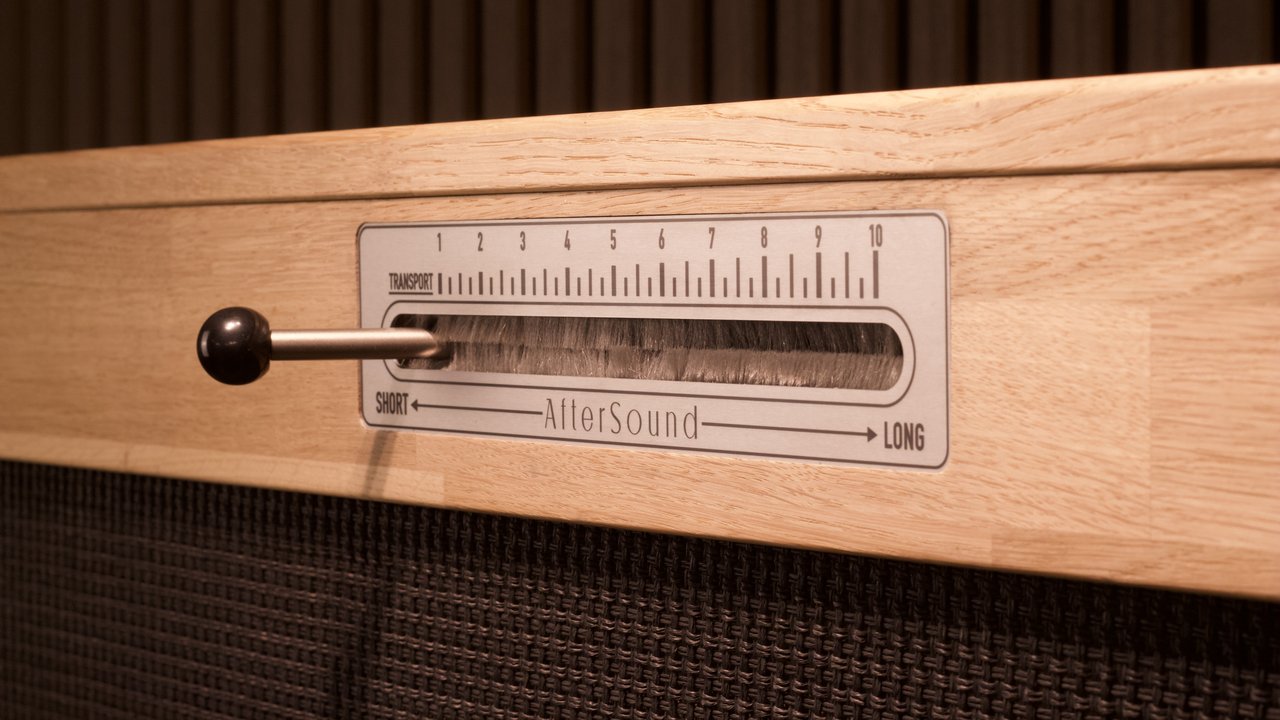
Decay time is set mechanically, not digitally: a lever moves a damping plate against the steel, from around 0.1 seconds for a tight, small-room decay to roughly 4 to 5 seconds for a hall. The Reverbophone itself makes no sound in the room. The reverb exists only inside the two microphones capturing it.
Two modes
Reverberating microphone, or traditional plate
Reverberating microphone mode
The default mode, and the one that gives the Reverbophone its name. The room’s own sound excites the plate acoustically; two mounted microphones capture its decay. Nothing drives the plate directly.
Traditional plate mode
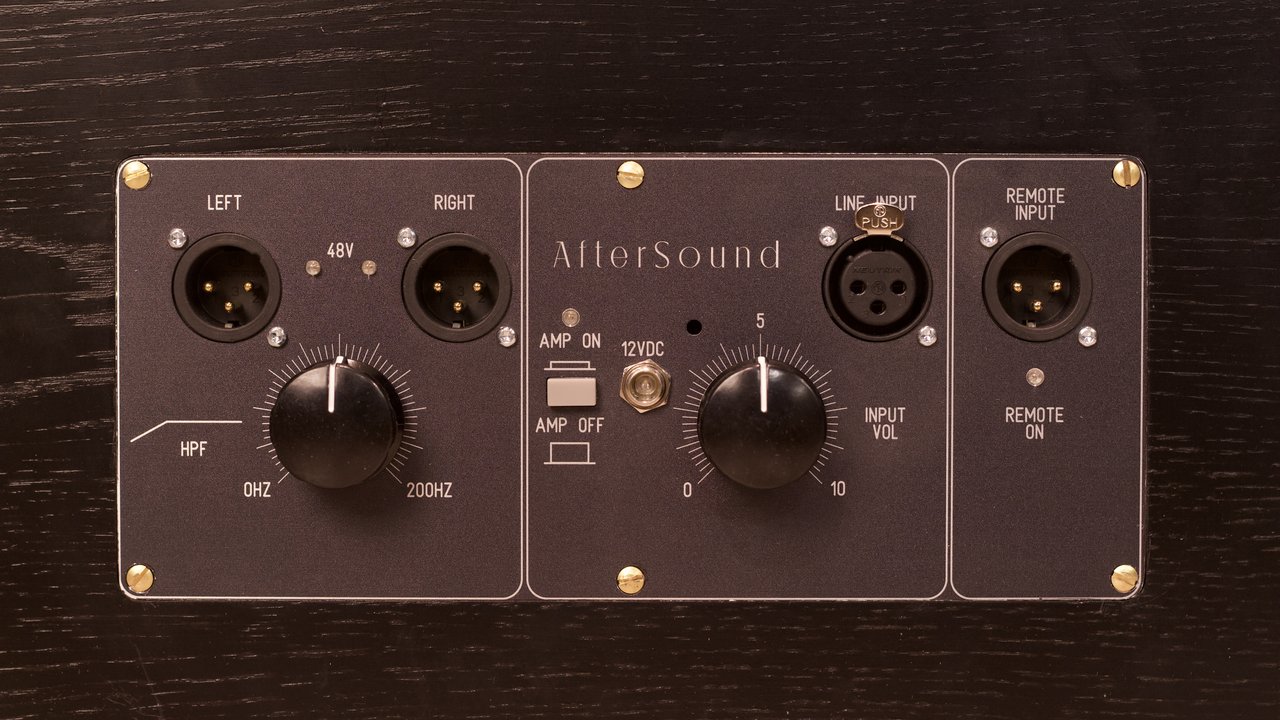
A built-in transducer and amplifier can drive the plate directly from a line-level signal, the way a conventional plate reverb works. It takes a line-level XLR input and 12 to 18V DC. The manufacturer notes this mode reads brighter and more focused, with less deep low end than microphone mode.
Integration
What you need to run it
Two channels of phantom power (48V) from your preamp, and two spare mic inputs for its stereo XLR output. A sweepable high-pass filter, 0 to 200 Hz, sits on the rear panel. Output impedance is 440 ohm, and it runs on standard mic lines, no special cabling required.
Specifications
| Dimensions (with wheels) | 1710 × 936 × 440 mm |
|---|---|
| Weight | 62 kg |
| Outputs | 2 × XLR (L/R), phantom power (48V) required |
| Output impedance | 440 ohm |
| High-pass filter | Sweepable, 0 to 200 Hz |
| Plate-mode input | 1 × XLR, line-level, 12 to 18V DC |
| Decay range | 0.1 seconds (small room) to around 4 to 5 seconds (hall) |
| Made in | Bollnäs, Hälsingland, Sweden |
Placement and space
Honest guidance on where it lives
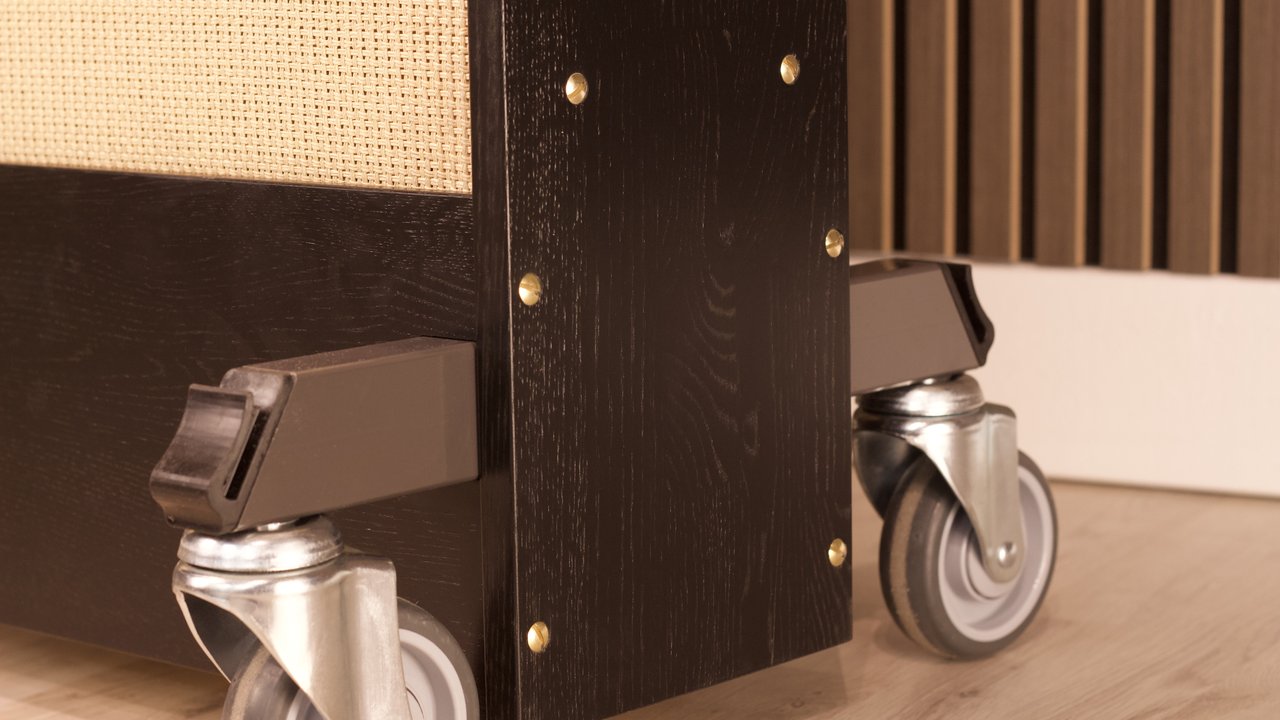
1710 × 936 × 440 mm on its wheels, and 62 kg. It rolls on locking castors, so it moves into a control room, sits against a wall, and rolls back out of the way when a session does not need it.
It needs no acoustic isolation of its own. The plate is excited by the room’s own sound, so wherever it stands in the room becomes part of the sound it returns.
Two rooms, one remote
Running two Reverbophones at once
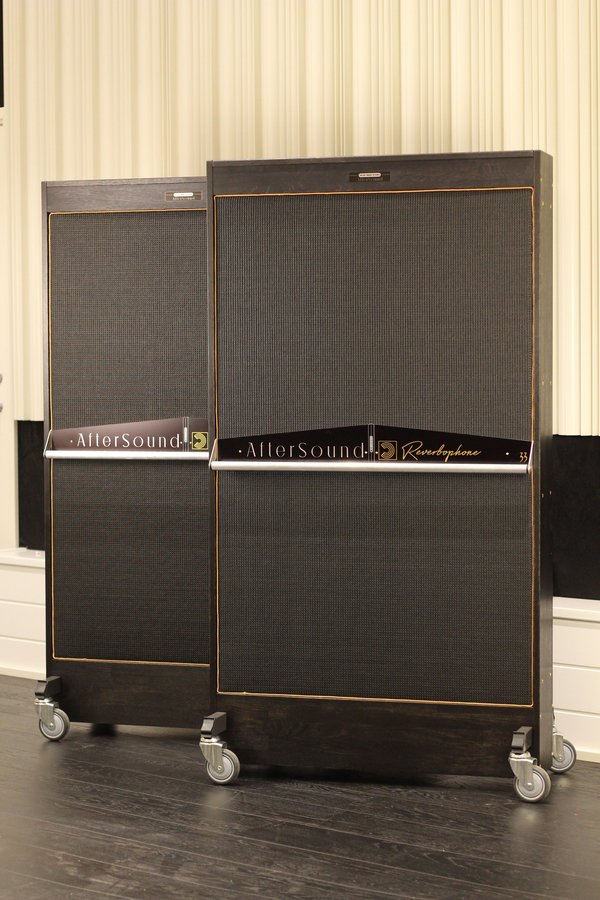
Two units give a session two room sizes at once, a tight decay on one plate and a longer one on the other, both available without swapping settings mid-session.
The optional Remote Control add-on servo-drives the decay lever over a 3-pin XLR run, tested to 1200 metres, and one remote can drive two units.
Order enquiry
See how it behaves in your room
The only way to really understand the mechanism is to hear it move. Enquire to order, or ask about an audition.
$8,995 inc. GST · Built to order in 8 to 12 weeks
